

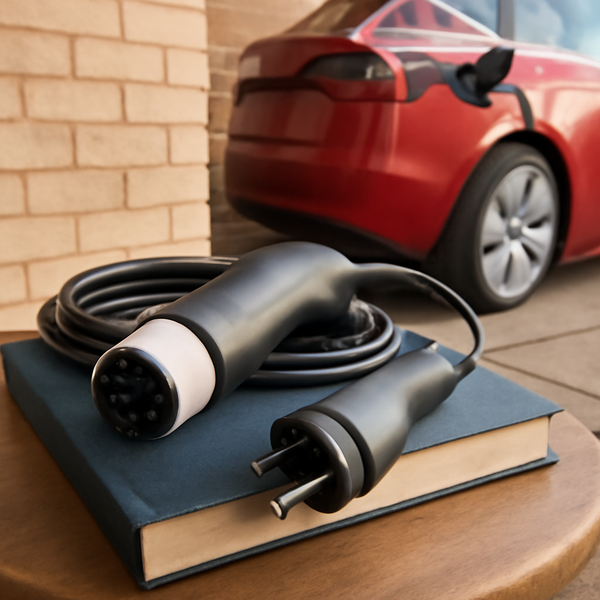
As electric vehicles (EVs) continue to dominate the automotive landscape, the need for convenient and reliable charging solutions becomes paramount. For EV owners navigating the roads in 2025, understanding the benefits and functionalities of portable electric car chargers is crucial. These devices offer unparalleled flexibility, allowing drivers to charge their vehicles at home, at work, or even on the go, eliminating range anxiety and simplifying the EV ownership experience. This comprehensive guide delves into the world of portable EV chargers, exploring their features, advantages, and how they contribute to a seamless transition into electric mobility, ensuring you're always powered up for your journeys.
Understanding Portable EV Charger Types and Features
Portable electric car chargers, often referred to as Level 1 and Level 2 portable chargers, are designed for ease of use and versatility. Level 1 chargers typically plug into a standard household outlet (120V) and offer a slower charging rate, making them ideal for overnight charging at home or when a power source is readily available. They are generally the most affordable and require no special installation. Level 2 portable chargers, on the other hand, utilize a 240V outlet, similar to those used for large appliances like dryers, and provide a significantly faster charging speed. While some Level 2 portable chargers can be plugged into compatible 240V outlets, others may require professional installation of a suitable outlet. Key features to consider when choosing a portable charger include charging speed (measured in miles of range added per hour), cable length, connector type (most commonly J1772 for North America), adjustability of amperage, smart features like app control and scheduling, and safety certifications such as UL listing. Durability and weather resistance are also important factors, especially if the charger will be used outdoors. Understanding these distinctions will help you select a portable charger that aligns with your charging habits, vehicle's charging capabilities, and budget, ensuring optimal convenience and efficiency for your electric vehicle.
Benefits of Owning a Portable EV Charger
The primary advantage of owning a portable electric car charger is the enhanced freedom and flexibility it provides for EV owners. No longer are you solely reliant on public charging stations, which can sometimes be occupied, out of service, or inconveniently located. A portable charger means you can charge your vehicle wherever you have access to a compatible power outlet. For those with access to a 240V outlet at home, a Level 2 portable charger can significantly reduce charging times compared to a Level 1 charger, meaning your EV is ready to go in the morning even after a shorter period of being plugged in. This is particularly beneficial for individuals who have limited time for charging or who frequently undertake longer trips and need to quickly top up their battery. Furthermore, having a portable charger can be a valuable asset when traveling, allowing you to charge at friends' or family members' homes that may not have dedicated EV charging infrastructure. It also offers a reliable backup option in case your usual charging setup experiences any issues. The convenience of not having to plan your day around public charging station availability cannot be overstated, contributing to a more relaxed and stress-free ownership experience. Many portable chargers are also designed with portability in mind, featuring compact designs and carrying cases, making them easy to store in your vehicle's trunk or transport when needed.
Choosing the Right Portable Charger for Your Needs
Selecting the optimal portable electric car charger involves a careful assessment of several factors tailored to your individual circumstances. First, determine your primary charging location and the type of power outlets available. If you primarily charge at home and have a standard 120V outlet, a Level 1 portable charger might suffice, though it will charge at a slower pace. If you have a 240V outlet or are willing to have one installed, a Level 2 portable charger will offer a substantial increase in charging speed, adding considerably more range per hour. Consider the length of the charging cable; a longer cable provides greater flexibility in parking your vehicle relative to the power source. Also, check the charger's adjustable amperage settings. The ability to adjust the amperage allows you to match the charger's output to the capacity of your home's electrical circuit or your vehicle's charging limit, preventing overloaded circuits and ensuring safe operation. Smart features, such as Wi-Fi connectivity, app control, and charging scheduling, can add significant convenience, allowing you to monitor charging progress, set charging times to take advantage of off-peak electricity rates, and receive notifications. Always prioritize chargers from reputable manufacturers that have received safety certifications like UL or ETL, ensuring they meet rigorous safety standards. Reading user reviews and comparing specifications across different models will empower you to make an informed decision that best suits your electric vehicle and lifestyle in 2025.
Installation and Usage of Portable EV Chargers
Using a portable electric car charger is designed to be straightforward, but understanding the process, especially regarding electrical compatibility, is crucial for safety and efficiency. For Level 1 portable chargers, the process is as simple as plugging the charger into a standard 120V household outlet and then connecting the other end to your electric vehicle's charging port. It's advisable to use a dedicated circuit for the outlet if possible to avoid tripping breakers, especially if other high-draw appliances are on the same circuit. For Level 2 portable chargers, the situation is slightly more involved. While some are designed to plug into existing 240V outlets (like those for electric dryers), many require a dedicated 240V outlet to be installed by a qualified electrician. This installation ensures the circuit can handle the higher power draw safely. Once the outlet is ready, you simply plug in the portable Level 2 charger and connect it to your EV. Always ensure the charging cable is not kinked or damaged before use. After charging is complete, safely unplug the connector from your vehicle and then from the power source. Many modern portable chargers come with built-in safety features such as overcurrent protection, overvoltage protection, and ground fault detection, providing peace of mind during operation. Always refer to the manufacturer's instructions for specific usage guidelines and troubleshooting tips to maximize the lifespan and performance of your portable EV charger.
The Future of Portable EV Charging in 2025 and Beyond
The landscape of portable electric vehicle charging is continuously evolving, with advancements in technology promising even more convenient and efficient solutions for EV owners in 2025 and into the future. We can anticipate more sophisticated smart features, including enhanced integration with vehicle-to-grid (V2G) technology, allowing EVs to not only draw power but also feed it back into the grid during peak demand, potentially offering financial incentives to owners. Wireless charging capabilities for portable devices are also likely to become more integrated, offering a truly cable-free charging experience. Furthermore, battery technology is advancing, leading to the development of portable chargers with integrated battery packs that can provide a significant charge to an EV even when a traditional power outlet is unavailable, offering a true 'charge on the go' solution. Increased focus on sustainability will likely drive the development of chargers made from recycled materials and those optimized for energy efficiency. As EV adoption grows, manufacturers will also likely offer a wider range of portable chargers with varying power outputs and specialized features to cater to diverse needs, from compact, lightweight options for urban dwellers to robust, high-power units for long-distance travelers. The ongoing innovation in this sector ensures that staying powered up with an electric vehicle will become increasingly seamless and accessible for everyone.